What is a Heart Attack?
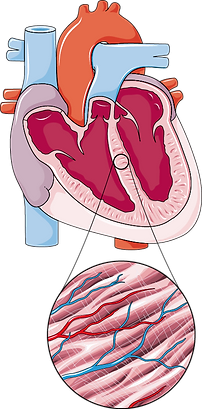
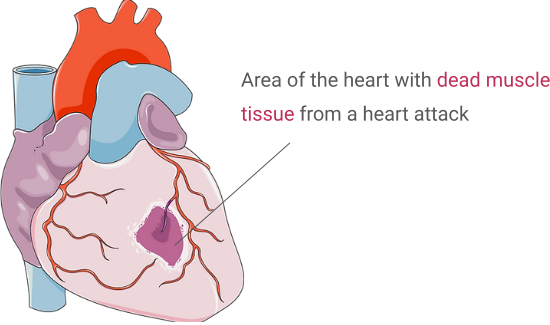
Heart attacks happen when part of the heart muscle is damaged because blood and oxygen does not reach it. If the portion of the heart muscle is starved of its oxygen supply for too long, the heart tissue dies. This is a heart attack, otherwise known as myocardial infarction. Heart attacks are very serious and can lead to death without immediate treatment.

1 in every 5 deaths in Malaysia are due to a heart attack!
According to the Ministry of Health Malaysia, heart disease remains the number one killer of Malaysians over the past 30 years. In 2015, a total of 17,771 Malaysians had a heart attack. In 2016, heart disease caused a total of 22.62% deaths. In 2017, the World Health Organisation (WHO) reported that heart attacks caused 30,598 or 22.13% of all deaths in Malaysia.

How Do I Know If I Have A Heart Attack?
- Severe pain or discomfort in the chest
- Pain or numbness spreading to the left arm and jaw
- Shortness of breath
- Lightheadedness, nausea or vomiting
- Cold sweats
Heart Attack Centres
Our specialized heart attack centres are fully equipped with advanced cardiac facilities and a team of expert cardiologists. If you’re experiencing a heart emergency, visit a heart attack centre for immediate access to life-saving treatments like primary percutaneous coronary intervention (PCI) for the best possible care and outcomes.
What Are The Common Risk Factors For A Heart Attack?

Smoking

Diabetes

High blood pressure

Male gender

Age

High cholesterol

Family history

Sedentary lifestyle
About 50% of patients with heart attacks have 3 or more risk factors!
Age matters! Malaysians develop heart attacks at a much younger age. 50% of patients develop a heart attack in the prime of their life between 40 - 60 years!
How Common Are These Risk Factors Among Malaysians?

4 out of 5 Malaysians are overweight 13.8 million adults are overweight or obese

3 out of 5 Malaysians have high blood pressure 6.4 million adults have high blood pressure

2 out of 5 Malaysians have Diabetes 3.8 million adults are diabetic
3 out of 5 Malaysians have high cholesterol 10.3 million adults have high cholesterol
2 out of 5 Malaysians smoke 4.8 million men smoke cigarettes

What is a STEMI?
ST-Elevated Myocardial Infarction (STEMI) is a very serious type of heart attack. This is usually due to rupture of an atherosclerotic plaque in a blood vessel (coronary artery) supplying the heart. Doctors will be able to detect this serious problem with an electrocardiogram (ECG) and can provide immediate treatment. In this case, quick and effective treatment saves lives.
What is a PCI?
Primary percutaneous coronary intervention (PPCI) is the gold standard in treating heart attacks, especially STEMI cases. This treatment involves a minor surgical procedure whereby a thin wire with an expandable balloon tip is inserted into one of the major arteries of the body and is directed into the blocked blood vessel (coronary artery) in the heart. The balloon is then inflated (angioplasty) to open up the blockage, widening the narrowed artery.
Following that, a metallic scaffold (stent) is inserted in the place of the balloon in order to restore blood flow to the heart. The wire and balloon are then taken out of the body, leaving only a small scar at the entry site. This whole procedure takes approximately 30 minutes to 1 hour and greatly improves survival rates as well as reduces long-term morbidity in the patient.
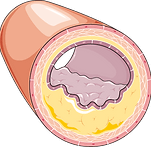
Atherosclerosis in blood vessles due to fat build up
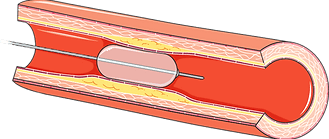
Angioplasty balloon used to open up narrowed and clogged arteries
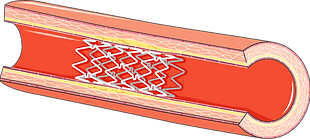
Stent in the blood vessel help keep it open and allow blood flow
Primary Percutaneous Coronary Intervention (PCI):
A Patient's Experience
A 34 year old man was admitted to University Malaya Medical Centre after having severe chest pain, breathlessness and numbness in his hand. He was diagnosed with a heart attack in the hospital and was immediately treated with a life-saving Primary Percutaneous Coronary Intervention (PCI). Since then, he has recovered well and is doing his best to lead a healthy lifestyle. Watch him share his experience on getting a heart attack and having a life saving primary percutaneous coronary intervention.